The Bedding Edit
Mattress Protectors and Pads: How to Choose the Right Bedding Layer
A considered bedding layer can do more than finish a beautifully made bed. The right pad may soften a firm surface; the right protector can help shield a mattress from spills, stains, and everyday wear. Though the two are often discussed together, they are not interchangeable. Understanding what each one does—and how fabric, fit, and care shape its performance—makes it easier to choose a layer that feels right from the first night onward.
First, know the difference
A mattress pad is primarily a comfort layer. It sits between the mattress and fitted sheet, adding cushioning or a little extra loft to the sleep surface. Depending on its fill and construction, a pad can feel softly quilted, plush, airy, or relatively smooth. It may also help protect against ordinary wear, but its central purpose is to change or refine how the bed feels.
A mattress protector has a more practical brief: to create a barrier between the mattress and common sources of soiling. Depending on its design, it may guard against moisture, spills, stains, dust, or other everyday contact. A protector is usually designed to preserve the character of the mattress rather than add noticeable cushioning. Some use a waterproof layer, while others focus on breathable coverage against routine wear.
There are products that combine elements of both. A cushioned waterproof pad, for example, can add softness while helping block moisture. The names on a label are not always enough to establish exactly what an item does, so look beyond the product title. Check the construction, materials, protection claims, and care instructions before deciding whether it meets your needs.
In short: choose a pad when comfort is the priority, a protector when guarding the mattress is the priority, and a combined layer when you want both in one piece. For some beds, the most useful arrangement is a protector close to the mattress, with a comfort-enhancing pad above it. The best configuration depends on how each layer fits, feels, and can be laundered.
Begin with the problem you want to solve
Before comparing cotton, down, wool, or waterproof finishes, name the reason you are shopping. A clear purpose keeps an appealing material or elegant description from distracting you from the feature that matters most.
- To soften a sleep surface: Look at pads and toppers with cushioning or loft. Consider how much change you want; a thin quilted pad creates a different impression from a generously filled topper.
- To guard against spills and moisture: Focus on products that specifically describe a waterproof barrier, and read the care label to learn how to maintain it.
- To keep the mattress surface fresher between deep cleans: Choose a washable layer with a fit and care routine that suits your household.
- To protect a mattress from general wear: A lightweight protector may be enough if moisture resistance is not your main concern.
- To refresh an older bed: A pad may change the surface feel, but it cannot correct a mattress that is damaged or no longer provides the support you need.
Be specific about the circumstances, too. A guest bed used occasionally may need a different combination from a child’s bed, a frequently used sofa bed, or a mattress shared with pets. Where spills are a realistic concern, clear waterproof claims and straightforward laundering may matter more than a particularly plush hand. Where the mattress already feels comfortable, a thin protector that preserves its feel may be the more discreet choice.
Materials set the mood—and the maintenance
Materials influence touch, warmth, loft, breathability, and how a bedding layer behaves in the wash. They are not a universal shortcut to comfort: the same material can feel different depending on the fabric, fill, quilting, and overall construction. Think of the details as a complete composition, rather than judging a layer by a single fiber name.
Cotton: familiar, versatile, and easy to understand
Cotton appears in covers, shells, terry surfaces, and quilted constructions. It can feel smooth or softly textured, depending on its weave. Cotton is also used with a separate waterproof backing, so a cotton face does not, by itself, tell you whether a product blocks moisture. Read the construction details to see what sits beneath the fabric and whether the finished layer is intended as a pad, a protector, or both.
Down and down-alternative fills: a question of loft
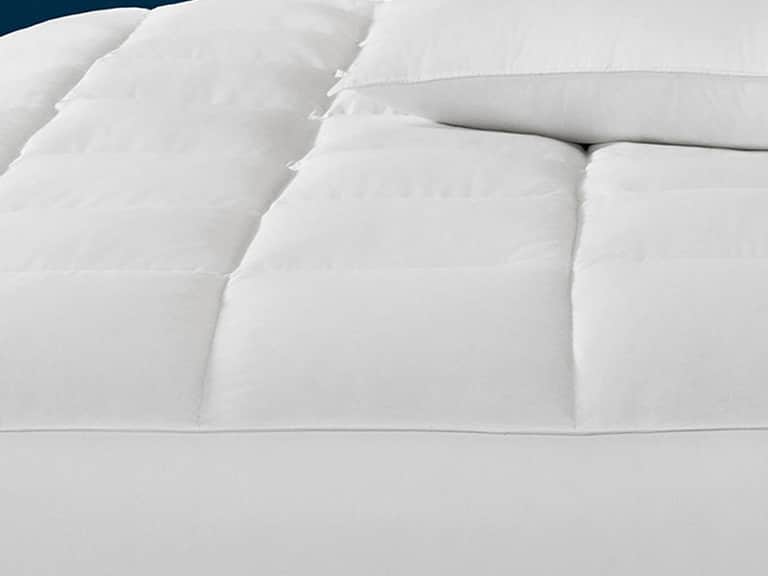
Down and down-alternative fills can give a pad a more cushioned, inviting feel. Construction matters: box or channel stitching helps hold fill in place, while the amount and type of fill affect the final loft. A lofty layer can make a bed feel more indulgent, but it is not automatically the right choice for someone who wants a barely-there barrier. Check whether the product can be machine washed and follow its instructions carefully, since heat and unsuitable detergents may affect the fill or fabric.
The Monmouth Mattress Pad is one example of a comfort-focused option: it has European white goose down, a lightweight cotton batiste shell, 600-plus fill power, and sewn-through box construction intended to keep the fill evenly distributed. Its elasticized sides are designed for mattresses up to 20 inches deep. The listed care is machine washing on a cold, gentle cycle, with the care label as the guide. These details make it important to consider both the desired loft and the practicalities of maintaining a down-filled pad.
Wool: a naturally textured comfort layer
Wool appears in some mattress toppers and pads for its cushioning and moisture-managing qualities. The feel will depend on the amount of wool, how it is contained, and the fabric enclosing it. A wool topper is not the same thing as a waterproof protector; it may need a separate protective layer above it if you want a barrier against stains or accidents.
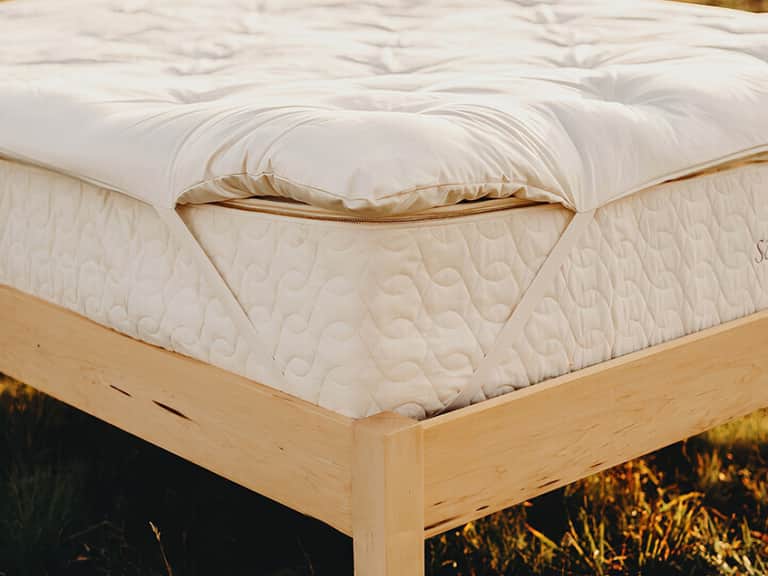
The Savvy Rest Natural Savvy Woolsy Mattress Topper uses natural wool inside a quilted certified organic cotton cover. It is designed to add softness and includes corner straps to help secure it. The product information recommends adding an organic mattress pad over the topper to protect it and the mattress from stains, perspiration, and accidents—a useful illustration of how a comfort layer and a protective layer can serve different roles.
Waterproof layers: protection without guesswork
Waterproof bedding typically relies on a barrier beneath its surface fabric. The feel and sound of that barrier can vary between products, so look for details about breathability, noise, and the way the layers are joined. If preserving a mattress’s original feel is important, pay attention to how thick or padded the protector is. If liquid protection is essential, confirm that the product explicitly provides it rather than assuming that “protective” means waterproof.
The Sleep and Beyond Organic Cotton Waterproof Mattress Protector pairs an organic cotton jersey surface with a waterproof membrane. Its product information describes a fitted style and provides different maximum mattress depths by size, as well as machine-wash and drying guidance. As with any fitted layer, check the size-specific measurements and follow the stated instructions, particularly because the manufacturer notes that washing can affect fit.
Terry and smooth-knit surfaces: practical differences
Cotton terry can offer a familiar, softly textured surface, while jersey and other smooth knits may feel more like a simple fitted sheet beneath the bedding. Neither description alone guarantees a particular level of protection or comfort. Look for explicit statements about waterproof finishes, mattress depth, and laundering, then choose the texture you would prefer to have under your sheet.
Fit is the detail that changes everything
A well-chosen mattress protector or pad should sit securely, without pulling loose at the corners or bunching beneath the sheet. A layer that shifts can interrupt the smooth, composed feel of a bed, and it may leave portions of the mattress less protected. Fit deserves as much attention as fill or fabric.
Start by measuring the mattress, including its depth. A fitted protector’s pocket must accommodate the mattress itself and, where relevant, any layer that will remain beneath it. A thick mattress or a substantial topper can make a standard pocket too shallow. Conversely, a very deep pocket on a comparatively low mattress may allow excess fabric to gather. Compare the manufacturer’s maximum depth with your actual setup rather than relying on a general size label such as Queen or King.
Also check the fastening style. Fitted-sheet-style protectors use elastic around the edges or corners; some pads have elasticized side walls, while others use corner straps. Each design can work well when properly matched to the mattress. For split or adjustable beds, confirm whether the protector is available in the necessary configuration and whether each mattress section needs its own piece.
If you are layering a topper, pad, and protector, test the complete arrangement. A protector that fits the mattress alone may not stretch comfortably over a thick topper, and placing layers in the wrong order can make them less secure. Follow product guidance where provided. In general, a protective barrier belongs close to the mattress, while a plush layer can sit above it—but the construction of a particular item may influence the best placement.
Breathability and comfort beneath the sheet
A protector should protect without making the bed feel needlessly stiff or warm. Breathability is therefore a useful specification to investigate, particularly if you are sensitive to changes in temperature or dislike a crinkly surface. Descriptions such as “breathable” can be helpful, but construction and material details provide a clearer picture of how the layer is made.
Remember that the whole bed contributes to the sleep climate. Mattress materials, sheets, blankets, room temperature, and personal preference all play a part. A breathable cover cannot guarantee that every sleeper will feel cool, just as a particular fiber does not automatically create a temperature-neutral bed. If possible, consider the layer alongside the bedding you already use, and look for a return or trial policy if available from the retailer.
Thickness matters here, too. A thin protector is usually intended to preserve the existing surface feel; a filled pad is designed to add some softness. If your mattress has carefully chosen comfort characteristics, a bulky pad may alter them. If the bed feels too firm, a pad or topper can provide a more immediate adjustment, though the effect depends on its materials and loft. Choose the smallest change that addresses the issue rather than assuming that more padding is always better.
Care instructions are part of the purchase
Bedding layers are most useful when they are practical to keep clean. Before buying, check whether the item is machine washable, whether it can be tumble-dried, and whether the care guidance rules out bleach, fabric softener, or high heat. These instructions are not fine print to save for later: they can determine whether a layer suits your household’s routine and whether its protective or cushioning properties last as intended.
Waterproof layers can require more careful handling than an ordinary cotton cover. Excessive heat may damage some membranes, while unsuitable cleaning products can affect the fabric or finish. Follow the specific label rather than applying assumptions from other bedding. If a protector has a warranty, read its conditions; coverage commonly depends on following the specified care method, and particular forms of wear may be excluded.
For filled pads, laundering technique can help preserve the distribution and loft of the fill. Some products call for a gentle cycle and low-heat drying; others may have different requirements or may not be suited to frequent machine washing. Spot-cleaning a small mark can sometimes be preferable, but do not improvise if the label provides a specific method. When in doubt, the manufacturer’s instructions take precedence over a generic laundry tip.
It can also be helpful to keep a spare layer available. Rotating bedding gives a protector time to dry fully after laundering and reduces the pressure to put a damp layer straight back on the bed. A waterproof barrier should never be treated as a reason to ignore ordinary cleaning or to leave moisture trapped beneath the bedding.
A simple guide to layering
There is no single arrangement for every bed, but a thoughtful sequence makes each layer’s job clear. Begin with the mattress. If you are using a separate topper to change the feel, place it according to its instructions. Add a protector where it can shield the mattress and, if needed, the topper. A comfort pad may then sit above the protector, followed by the fitted sheet. Some people prefer the protector directly over the mattress with a topper on top; others may find a combined pad-protector is sufficient.
The right order depends on what you want to protect. If the topper itself is vulnerable to spills, the barrier may need to cover it as well as the mattress. Make sure that the protective layer can fit over the full stack without stretching beyond its intended depth. The arrangement should lie flat, feel comfortable, and remain securely in place when the bed is made and used.
For an adjustable bed, fit is especially worth checking. The bedding needs to move with the mattress as the base changes position. Choose products designed to accommodate the mattress dimensions and test whether their elastic or straps stay secure through ordinary adjustments. Avoid assuming that a protector made for a standard, stationary setup will automatically suit every configuration.
A buying checklist worth keeping
Before adding a mattress pad or protector to your basket, pause over these practical questions. A few minutes spent comparing specifications can prevent a disappointing mismatch between the product and the bed.
- What is my priority? Comfort, waterproof protection, general wear coverage, or a combination?
- What are the mattress dimensions? Confirm the size and measure depth, including any layer that will remain underneath the product.
- What does the construction actually provide? Look for clear information about fill, surface fabric, backing, and whether the item is waterproof.
- How will it feel? Consider loft, texture, thickness, breathability, and whether you want to preserve or change the mattress feel.
- How is it secured? Check for elasticized sides, fitted edges, corner straps, and compatibility with split or adjustable beds.
- Can I care for it properly? Review wash temperature, drying method, and any restrictions on detergents or bleach.
- What does the warranty cover? Read the terms and note care requirements or exclusions that may affect coverage.
Common assumptions, gently corrected
“A mattress pad protects the mattress as well as a protector.” Not necessarily. A pad may offer some coverage against ordinary wear, but protection against liquids depends on its construction. Confirm that a waterproof barrier is explicitly described if that is what you need.
“Waterproof means uncomfortable.” Not always. Materials and construction vary, and some products are designed to keep the surface soft and breathable. Still, individual preferences differ, so examine the specifications and look for useful fit and care details.
“A thicker pad is automatically more comfortable.” More loft can make a bed feel plusher, but it may also change the mattress’s original support and make fitted sheets harder to secure. Comfort is personal; choose thickness according to the change you want, not simply the maximum available.
“The size label guarantees a good fit.” Mattress depth matters as much as standard width and length. Deep mattresses, pillow tops, or added toppers can require a product with deeper pockets. Check the measurements before purchase.
“Every bedding layer can be washed the same way.” Care instructions differ by fill, fabric, backing, and construction. A treatment that is appropriate for one cotton pad may be unsuitable for a waterproof protector or down-filled layer. Use the label as your authority.
The final edit: choose by purpose, then refine
The best mattress layer is rarely the one with the most elaborate description. It is the one that answers a real need, fits the bed, feels agreeable beneath the sheet, and can be cared for without fuss. If your mattress is comfortable and your main concern is spills, start with a protector that clearly states its barrier function. If you want a softer landing, explore pads and toppers by fill and loft, then consider whether they need a separate protector. If you want both, choose a combined design or layer the pieces intentionally.
There is quiet luxury in getting these details right: a surface that feels smooth, a protector that stays put, and bedding that can be refreshed with a familiar wash cycle. No one material is ideal for every sleeper, and no single layer can solve every mattress concern. But a thoughtful choice can preserve the feel you love, add comfort where you want it, and make everyday care more straightforward.
Measure first. Read the construction notes. Keep the care label close. Then choose the bedding layer that earns its place—not by promise alone, but by the way it works with your mattress and the way you live.